

Frequently Asked Questions
About Renbrook & School Culture
What makes Renbrook different from other independent schools?
Renbrook combines academic rigor with joyful, hands-on learning in a close-knit community. Our students are challenged intellectually while being encouraged to explore, create, and discover who they are. Small class sizes, strong relationships, and an emphasis on character and leadership allow every child to be truly known.
Renbrook is often described by community members as a special and unique school due to its rapport-driven values. The relationships our teachers develop with each of their students are deep and supportive. We believe students learn, grow, and achieve when they feel seen and recognized as individuals. When those relationships are built, our teachers are able to challenge their students in rigorous coursework and to fulfill their passions be it as an athlete, musician, or artist.
Why do families choose Renbrook School instead of public schools?
Families choose Renbrook for its combination of academic rigor, joyful learning, and strong relationships. Small class sizes allow teachers to know each student's strengths and areas for growth, while also focusing on character, leadership, and experiential learning helps children grow academically and personally.
Families tell us they choose Renbrook for a number of reasons such as our academic rigor and secondary school preparedness, our strong social emotional care and support, experiential and inquiry-based learning, and our teachers, a group of incredibly talents and dedicated educators who continuously go above and beyond in support of their students.
What is Renbrook’s educational philosophy?
Renbrook believes children learn best when they are engaged, curious, and supported. Our approach blends strong academics with experiential learning, outdoor education, creativity, and social-emotional growth, bringing learning to life every day.
How does Renbrook support the whole child?
At Renbrook, we nurture each child’s intellectual, social, emotional, and ethical development. Teachers know their students well and work closely with families to support confidence, resilience, empathy, and integrity alongside academic growth.
Through consistent positive interactions and meaningful feedback, teachers build strong, respectful relationships with every student. This foundation of trust helps children develop confidence and feel supported, making them more open to constructive guidance and better able to use it to grow and improve.
Academics & Curriculum
How academically rigorous is Renbrook School?
Renbrook offers a challenging academic program that emphasizes critical thinking, problem-solving, communication, and creativity. Students engage deeply with content through discussion, inquiry, and hands-on learning, preparing them well for competitive high schools without sacrificing curiosity or joy.
Detailed information by grade level can be found in our Academics section.
How do you balance academic challenge with joyful learning?
We believe rigor and joy go hand in hand. Students are challenged through inquiry-based projects, discussion, and hands-on exploration that make learning meaningful and engaging, starting in our youngest grades and continuing through middle school.
How are students challenged at different levels?
Teachers differentiate instruction to meet students where they are. Whether a child needs enrichment, extension, or additional support, instruction is tailored so that each student can grow confidently and at an appropriate pace.
What role does nature and outdoor learning play?
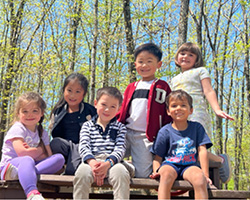
Renbrook’s location atop Avon Mountain provides a unique opportunity for outdoor and nature-based learning. Students regularly use the campus and surrounding environment to deepen understanding across subjects, build resilience, and develop a connection to the natural world.
At every age, our teachers use the natural surroundings of our 75-acre campus to bring learning to life – at our pond, on three playgrounds, on miles of campus trails, on our high and low ropes Challenge Courses, and on our abundant athletics fields. Learning outdoors develops grit and resilience, providing authentic learning opportunities in math, science, STEAM, literacy, social studies, and so many more.
Faculty & Classroom Experience
What are class sizes like at Renbrook, and why does that matter?
Small class sizes are central to the Renbrook experience, allowing for individualized instruction and meaningful teacher-student relationships. Teachers can adapt lessons, provide timely feedback, and ensure every student is seen and is actively engaged, confident, and supported throughout their learning journey.
What qualifications do Renbrook teachers and leaders have?
Our faculty and leadership team members are experienced educators who are passionate about teaching and mentoring children. They bring strong subject knowledge, a commitment to continuous growth, and a deep understanding of how children learn best.
Renbrook School employs 92 faculty and leadership team members. Of those 92 employees, 98% hold a bachelor’s degree and 58% hold advanced degrees.
How does Renbrook support students with different learning needs or who need extra help?
Renbrook supports diverse learners through differentiated instruction, collaboration among teachers and learning specialists, and close communication with families. The goal is to help students build skills and confidence while remaining fully engaged in the classroom experience. Student Support Services are embedded into the school day.
Student Life, Character & Community
How does Renbrook foster character and leadership?
Social-emotional growth and character development are woven into daily life at Renbrook. Students learn responsibility, empathy, integrity, and leadership through classroom expectations, community expectations, service learning, and age-appropriate leadership opportunities to take ownership and initiative.
Renbrook School uses Responsive Classroom in grades Preschool through 5. Responsive Classroom is an evidence-based, student-centered approach to teaching and discipline that integrates social-emotional learning (SEL) with academics to build safe, joyful, and engaging classrooms and school communities, fostering student success through key social and emotional skills (Cooperation, Assertiveness, Responsibility, Empathy, Self-Control - CARES) and academic competencies, leading to improved achievement and school climate.
In the Upper School, social-emotional skills, character building, and leadership building are addressed in grade-level advisories and our Life, Learning, & Leadership course, which uses the resources from the #WinAtSocial curriculum.
We believe that knowledge must be guided by values. Through the intentional development of skills and high standards of integrity, we prepare the whole child to lead in a global and inclusive world. On athletic fields and in classrooms, through careful mentoring and proven strategies, Renbrook graduates are prepared to lead with conviction.
What is the school culture like at Renbrook?
Renbrook is known for its warm, inclusive community where students feel known and valued. Strong relationships among students, teachers, and families create a supportive environment that encourages curiosity, kindness, risk-taking, and confidence.
How does Renbrook approach diversity, equity, and inclusion?
Renbrook is committed to fostering an inclusive community where all students feel valued, respected, and supported. Through curriculum, dialogue, and community practices, students learn to appreciate different perspectives and develop cultural awareness and empathy. Read more about Renbrook’s Diversity & Belonging Mission and Vision. In our Upper School Morning Meetings, the Student Diversity Leadership Council supports our culture of belonging by delivering presentations about heritage months, cultural holidays, and other related celebrations.
Secondary School Guidance FAQs
High School Placement & Long-Term Outcomes
How does Renbrook support families during the high school placement process?
Renbrook provides personalized secondary school guidance beginning in seventh grade. Through the Secondary School Workshop and individual family meetings, students reflect on their strengths, interests, and goals while learning about potential school matches.
In eighth grade, students receive coaching on school visits and interviews, guidance on application essays, and support throughout the admissions and financial aid processes. Renbrook also hosts an annual Secondary School Fair and welcomes admission representatives to campus, giving students opportunities to explore a wide range of schools.
How does Renbrook help families choose the right high school fit?
Renbrook focuses on finding the right match for each student rather than pursuing a single definition of success. The Director of Secondary School Guidance works closely with families to identify schools that align with a student’s strengths, interests, learning style, and goals so that every graduate transitions to an environment where they can thrive.
How does Renbrook prepare students for high school?
Renbrook graduates leave with strong academic foundations, confidence, independence, and the ability to advocate for themselves. They enter secondary school organized, curious, and ready to meet increased academic and personal expectations.
Each year, recent graduates share overwhelmingly positive feedback about their preparation and how well they are thriving in their new schools.
Where do Renbrook graduates attend high school?
Renbrook graduates are accepted to a wide range of highly regarded independent, boarding, magnet, and public high schools.
Recent schools include Avon Old Farms School, Choate Rosemary Hall, Deerfield Academy, Ethel Walker School, Frederick Gunn School, Hopkins School, Hotchkiss School, Kent School, Kingswood Oxford School, Loomis Chaffee School, Miss Porter’s School, Northfield Mount Hermon School, Northwest Catholic High School, Phillips Academy Andover, Phillips Exeter Academy, Pomfret School, Proctor Academy, St. Paul’s School, Stoneleigh-Burnham School, Suffield Academy, Tabor Academy, Taft School, Watkinson School, Westminster School, and Williston Northampton School.
How do Renbrook graduates perform in high school and beyond?
Renbrook graduates are widely recognized by secondary schools as confident, engaged, and well prepared. They tend to thrive academically, participate actively in school communities, and take on leadership roles.
Renbrook alumni go on to attend leading colleges and universities across the country, including Barnard College, Boston College, Bowdoin College, Brown University, Columbia University, Cornell University, Georgetown University, Harvard University, Middlebury College, Princeton University, Stanford University, Tufts University, the University of Michigan, the University of Pennsylvania, Wesleyan University, Yale University, and many others.
Admissions Process
What is the admissions process like?
Our admissions process is designed to be thoughtful, transparent, and family-friendly. It includes inquiry conversations, campus visits, student assessments, family meetings, and opportunities for families to get to know Renbrook’s culture and community. The detailed process helps families determine whether Renbrook is the right fit for their child.
What qualities does Renbrook look for in students?
We look for students who are curious, kind, and eager to learn. We value a partnership with families who share our commitment to growth, community, and joyful learning.
Is Renbrook the right fit for every child?
No single school is right for every family. Our goal is to help families determine whether Renbrook is the best match for their child’s learning style, personality, and goals.
How can we learn more or schedule a visit?
Families are encouraged to contact the Admissions Office to schedule a tour, attend an open house, or have a conversation with an admissions director about their child and the Renbrook experience. Upcoming Admission events and enrollment contact information can be found on our Visit page.
Tuition & Financial Aid
Does Renbrook offer financial aid?
Yes, Renbrook School provides more than $1.9 million annually in financial aid and is committed to socioeconomic diversity. More than 35% of students receive needs-based aid. Financial aid decisions are made confidentially and are designed to help ensure access to a Renbrook education.
In our efforts to make a Renbrook education a reality for as many families as possible, we offer need-based financial aid to qualified families in Grades K-8. Our budget for this program allows us to offer awards to qualifying families that cover up to 70% of all tuition and fees. We use Clarity, a financial aid application platform popular in independent schools, to help us determine these awards annually. For additional details, visit our Tuition and Financial Aid page.
How is tuition used?
Tuition supports exceptional teaching, small class sizes, academic programs, campus resources, and student support services ensuring a high-quality educational experience. Tuition and fees cover all areas of our academic programs, including field trips, classroom books and supplies, athletic and music equipment, a laptop for use in our Lower and Upper Schools, and a nutritious daily lunch with a variety of options for Grades 1-8.
Parent Partnership & Communication
How does Renbrook communicate with parents?
Open communication is a priority at Renbrook. We value strong partnerships with families and maintain open communication through conferences, progress reports, regular updates, and direct access to teachers and administrators.
How involved are parents in the school community?
Parents are valued partners in the Renbrook community. There are many opportunities to engage through events, volunteer activities, the Renbrook Parent Association, and community gatherings.
Beginning School FAQs
(Preschool – Kindergarten)
What is the focus of Renbrook’s Beginning School program?
In the Beginning School, we take great pride in curating an experience for our youngest learners that is joyful and developmentally appropriate. With the help from our wonderful indoor and outdoor learning spaces, we cultivate a curriculum that captivates children’s curiosities, develops their passions, and builds on their strengths. We believe in the power of play to help children develop their language, social, and executive functioning skills, and our curriculum, which is guided by themes, is expansive and responsive, allowing teachers to respond to children’s questions and choices to guide their units.
How does Renbrook support social and emotional development in early childhood?
Social-emotional learning is central to the Beginning School experience. Children learn to share, collaborate, express emotions, and develop independence through daily routines, guided play, and strong relationships with teachers and classmates
How does Renbrook prepare children for the transition to kindergarten and beyond?
Renbrook builds strong foundational skills while helping children develop confidence, curiosity, and comfort in a school setting. The transition to kindergarten is supported through thoughtful instruction and close communication with families.
How much structure versus play is there in Beginning School?
Renbrook balances purposeful play with age-appropriate structure. Children learn through exploration, guided activities, and routines that support both academic readiness and joyful discovery.
Lower School FAQs
(Grades 1–4)
What are the academic priorities in Lower School?
Renbrook’s Lower School division serves as a bridge between a student’s early childhood experiences and learning and their Upper School secondary school preparedness. As such, we focus on developing strong conceptual mathematicians, fluent, pleasure readers, and writers that clearly articulate their thinking. A strong foundation in literacy and mathematics are critical for a child to succeed and achieve at a higher level. Additional academic areas that are prioritized are STEM, social studies, and Spanish. Our STEM program is dynamic, joyful, and deeply experiential. It honors children’s natural curiosity while building the foundational skills they need to become innovative thinkers and confident problem-solvers. Our social studies units invite children to understand themselves, their community, and the wider world through engaging, hands-on experiences. Our goal is to nurture curiosity, empathy, cultural literacy, and the foundational skills of responsible citizenship.
How does Renbrook support individual learning styles in Lower School?
At Renbrook, every child is known, valued, and supported as a unique learner. Our Lower School program is intentionally designed to honor each student’s strengths, interests, and learning preferences while fostering independence, resilience, and a love of learning. We believe that when children feel seen and understood, they thrive academically, socially, and emotionally.
Here are the core ways Renbrook supports individual learning styles:
- Small Classes That Prioritize Relationships
With small class sizes and dedicated, expert teachers, students receive personalized attention every day.
- Teachers build deep relationships with students, understanding how they learn best
- Lessons are frequently adapted in real time based on students’ needs
- Every child’s voice is heard, ensuring participation and engagement
This relationship-forward approach allows teachers to tailor instruction with care and precision.
- Differentiated Instruction and Flexible Grouping
Renbrook teachers are skilled at designing learning experiences that meet children where they are and move them forward with both support and challenge.
- Lessons include multiple entry points and varied levels of complexity
- Students engage in flexible, fluid groups for reading, writing, math, and inquiry-based work
- Teachers offer choice in assignments, encouraging students to demonstrate their understanding in diverse ways
Differentiation ensures that academic rigor remains joyful and accessible to every learner.
- Hands-On, Multi-Sensory Learning
Learning at Renbrook is active, experiential, and grounded in the natural world.
- Students learn through movement, exploration, experimentation, and creation
- Multi-sensory tools such as manipulatives, visuals, graphic organizers, technology, and outdoor learning all support varied learning styles
- Nature-rich experiences help students who learn best through observation, tactile exploration, or kinesthetic experiences
This approach brings learning to life and supports students who thrive when content is tangible and immersive.
- The Workshop Model in Literacy and Math
The workshop model, central to Lower School instruction, naturally supports personalization.
- Mini-lessons introduce concepts succinctly
- Students work independently or in small groups at their just-right level
- Teachers confer with individuals daily to set goals and provide targeted instruction
Students develop autonomy while receiving focused, individualized teaching.
- Collaboration with Specialists and Support Staff
Student support at the Lower School level includes teams of staff members who work closely with classroom teachers to ensure all students succeed.
- Specialists in reading and math provide intervention and enrichment.
- Regular team meetings ensure consistent communication about student progress
- Teachers use assessments not to label, but to better understand each learner
This collaborative model reinforces a holistic, child-centered approach.
- Emphasis on Strengths, Interests, and Student Agency
Students are encouraged to explore their passions and take initiative in their learning.
- Projects often allow for student choice in topics, tools, or format
- Teachers lift students’ strengths, creative, analytical, artistic, leadership-oriented, and help them shine
- Students learn how they learn, developing self-awareness and confidence
This fosters independence and helps children build a strong sense of identity as learners.
- A Culture of Belonging and Emotional Safety
When students feel safe to take risks and show vulnerability, they can learn in the way that suits them best.
- Classrooms emphasize respect, inclusion, and trust
- Teachers model empathy, patience, and supportive feedback
- Students learn in an environment where questions, mistakes, and experimentation are welcome
This culture encourages students to stretch themselves and embrace challenge.
How does Renbrook help students build confidence and independence?
At Renbrook, confidence and independence aren’t taught in isolation. They are woven into every moment of a child’s school experience. Through intentional teaching, nurturing relationships, and thoughtfully designed challenges, Renbrook students grow into resilient, self-assured learners who believe in their abilities and understand their strengths.
Confidence begins with being known and valued. Renbrook teachers build strong, caring relationships with each child.
- Students feel safe to take academic and social risks
- Teachers model encouragement, empathy, and growth-minded feedback
- Children trust the adults around them, which empowers them to try new things
A foundation of belonging allows students to step forward bravely.
Renbrook classrooms normalize experimentation and perseverance.
- Mistakes are reframed as part of the learning journey
- Teachers guide students to reflect, revise, and persist
- Students see challenges as opportunities rather than obstacles
This mindset fosters courage, resilience, and self-efficacy.
Students are encouraged to do more for themselves over time.
- Younger learners practice routines, responsibility, and self-help skills
- Older students manage long-term assignments, collaborate on projects, and advocate for their needs
- Teachers gradually release responsibility as students demonstrate readiness
This scaffolded approach helps students discover their own capabilities.
Renbrook believes every child can be a leader.
- Students lead morning meetings, classroom jobs, buddy activities, and community initiatives
- Sports, arts, outdoor challenges, and service experiences allow children to shine in diverse ways
- With many entry points to leadership, students build confidence in their unique strengths
Leadership becomes an experience shared by all, not just a select few.
Confidence grows when students experience meaningful challenge paired with expert support.
- Teachers set high expectations and guide students toward them
- Differentiated instruction ensures every child feels capable and stretched
- Students learn to articulate their thinking, ask questions, and take ownership of their learning
Through rigorous academics that remain joyful, students become independent, analytical thinkers.
Renbrook’s extraordinary campus becomes a stage for developing independence.
- Outdoor adventures, ropes courses, hikes, and pond studies encourage exploration
- Students learn to assess risk, solve problems, and collaborate in real-world settings
- Nature helps children discover strength, adaptability, and confidence
The environment itself becomes a teacher.
Confidence flourishes when home and school collaborate.
- Teachers communicate regularly about student progress and growth
- Families are partners in encouraging resilience, responsibility, and self-advocacy
- Shared values create consistency that supports independent habits
This partnership makes children feel supported from all sides.
What role does creativity and hands-on learning play in Lower School?
Creativity and hands‑on learning are at the heart of the Lower School experience at Renbrook. These approaches are not add-ons or occasional activities. They are central to how young children think, explore, and build understanding and allow students to bring learning to life, deepen comprehension, and discover their strengths in joyful, meaningful ways.
Hands-on learning helps children make sense of the world by engaging their minds, bodies, and senses.
- Students build, experiment, observe, and create
- Materials, manipulatives, and real-world tools help abstract concepts become concrete
- Movement and tactile exploration support stronger memory and comprehension
This approach ensures that learning is active, joyful, and developmentally appropriate.
Creativity empowers students to express ideas, take risks, and approach challenges from different angles.
- Art, storytelling, design challenges, and imaginative play help children internalize new content
- Students learn that problems often have many solutions—and that their ideas matter
- Creative tasks cultivate flexible thinking, a skill essential for future academic success
Creativity is woven into every subject, not just the arts, reinforcing deep thinking across the curriculum.
Renbrook’s extraordinary campus gives students a rich landscape for hands-on discovery.
- Wooded trails, ponds, gardens, and outdoor classrooms offer endless opportunities for exploration
- Nature-inspired projects spark creativity and collaboration
- Students learn through observing, questioning, and interacting with their environment
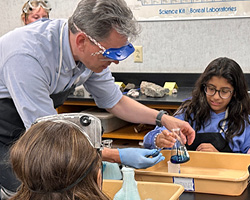
The outdoors becomes a living laboratory where children learn with curiosity and confidence.
When students work with their hands and their imaginations, they practice:
- Persevering through challenges
- Making decisions and testing hypotheses
- Revising ideas based on what they discover
- Advocating for their ideas and presenting their work
Hands-on and creative tasks give children ownership over their learning, which builds independence and self‑belief.
Creative, hands-on learning naturally reaches a wide variety of learners.
- Visual thinkers benefit from art, diagrams, and models
- Kinesthetic learners thrive through building, movement, and outdoor exploration
- Auditory learners connect through discussion, storytelling, and collaboration
- Analytical learners engage deeply through design, experimentation, and problem‑solving
This inclusive approach ensures that every student feels successful and engaged.
Creativity and hands-on exploration make learning feel alive.
- Students see school as a place where their imaginations are welcomed
- Wonder and curiosity drive inquiry and deepen academic engagement
- Joyful learning builds a lasting love of school and a strong foundation for future rigor
This spirit of joy and curiosity is a hallmark of the Renbrook experience.
Upper School FAQs
(Grades 5–8)
How does Renbrook’s Upper School prepare students for increased academic expectations?
Upper School builds advanced academic skills while emphasizing organization, time management, and critical thinking. Students are challenged through discussion, writing, and problem-solving, preparing them for the rigor of high school.
How does Renbrook support adolescents socially and emotionally?
Renbrook understands the developmental needs of middle school students. Advisors, teachers, our school counselor, and the Student Support Services team foster a strong community culture that helps students navigate social growth, build confidence, and develop healthy relationships
What leadership opportunities are available in Upper School?
Upper School students take on meaningful leadership roles through student activities, group projects, service opportunities, and community responsibilities that help them build confidence and accountability. As part of their capstone eighth grade experience, all students are assigned a leadership role to ensure they exercise the leadership capacities they have been learning and developing over the years.
How are students prepared to advocate for themselves academically?
Students are expected to communicate with teachers, reflect on feedback, and manage their responsibilities. These self-advocacy skills are intentionally developed and supported by our faculty in class and through our Advisory Program, WIN (What I Need) periods, and Study Hall to support long-term academic success.